

Please note, the majority of properties on the trail are now private residences,
please respect their privacy.
Bethlehem Chapel
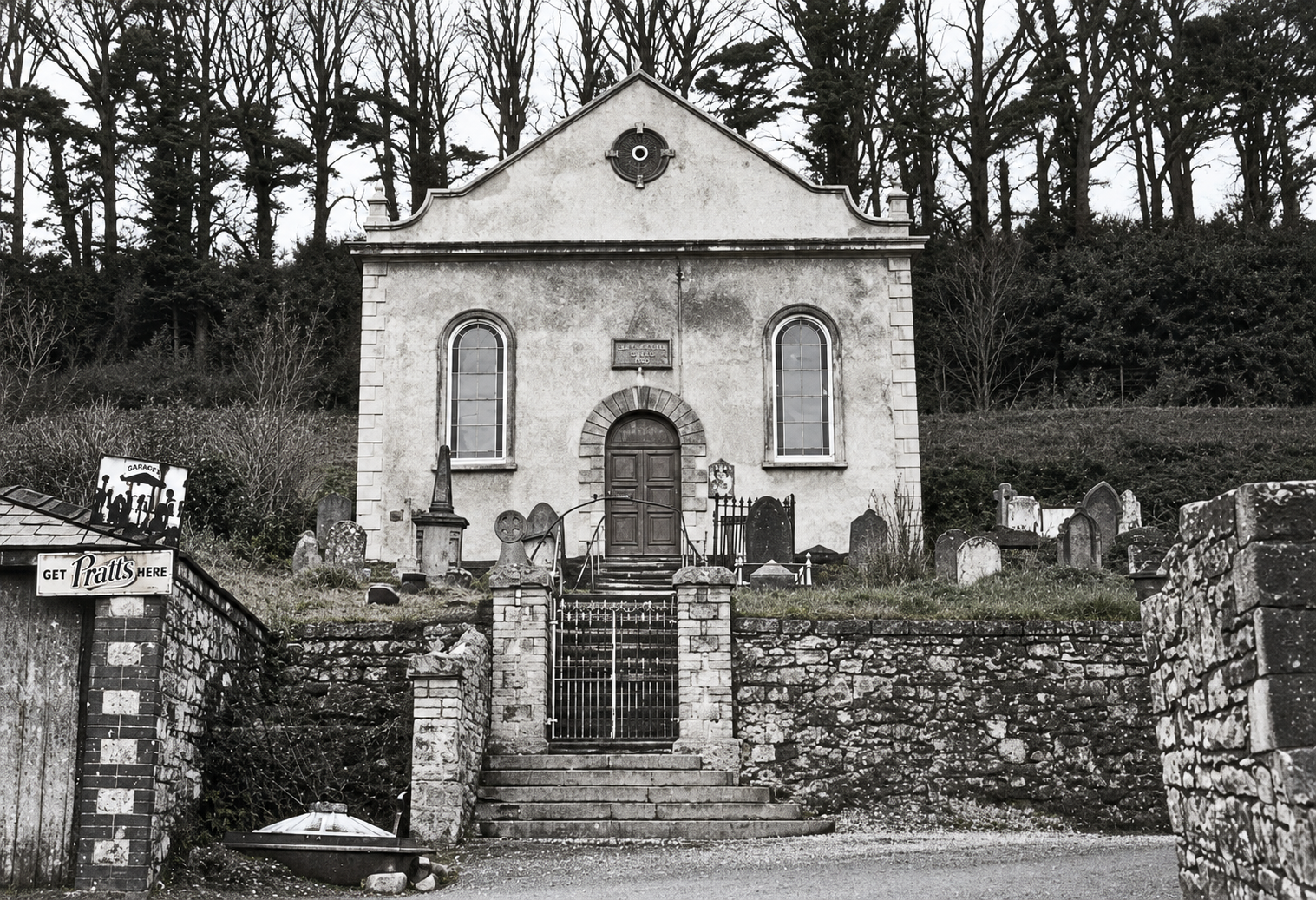
Just beyond Whitechapel, on the western side of the lane through Llancarfan, stands the former Bethlehem Baptist Chapel, a quiet reminder of the strong tradition of Nonconformist worship that once formed an important part of village life. The first Bethlehem Chapel was built in 1823, during a period when Baptist and other Nonconformist congregations were becoming firmly established throughout rural Wales. The chapel stood alongside its own burial ground and close to the village smithy, becoming an important gathering place for generations of local families. Its position, close to the road and beside the stream crossing, meant that it was very much part of the everyday life and landscape of Llancarfan, rather than an isolated place of worship.
By the later nineteenth century the congregation had outgrown, or perhaps simply required a replacement for, the original building, and the present chapel was rebuilt in 1870. Its restrained classical façade, with its round-headed doorway, tall windows, moulded cornice and distinctive shaped pediment, gives the building a dignified appearance quite different from the Gothic character of Whitechapel. The chapel continued to serve the Baptist community for many years, with worship, hymn singing and the close social connections that were characteristic of Welsh chapel life. Memories recorded by the Llancarfan Society show just how deeply Bethlehem was woven into village life well into the twentieth century, with services held several times each Sunday and local families maintaining strong connections with the chapel. Eventually the congregation declined and the chapel closed, and the building was converted into a private dwelling. Today, known locally as Capel yr Efail, it remains an important part of Llancarfan's historic streetscape and a tangible reminder of the days when the village supported several different places of Christian worship.