

Please note, the majority of properties on the trail are now private residences,
please respect their privacy.
Garn-lywd
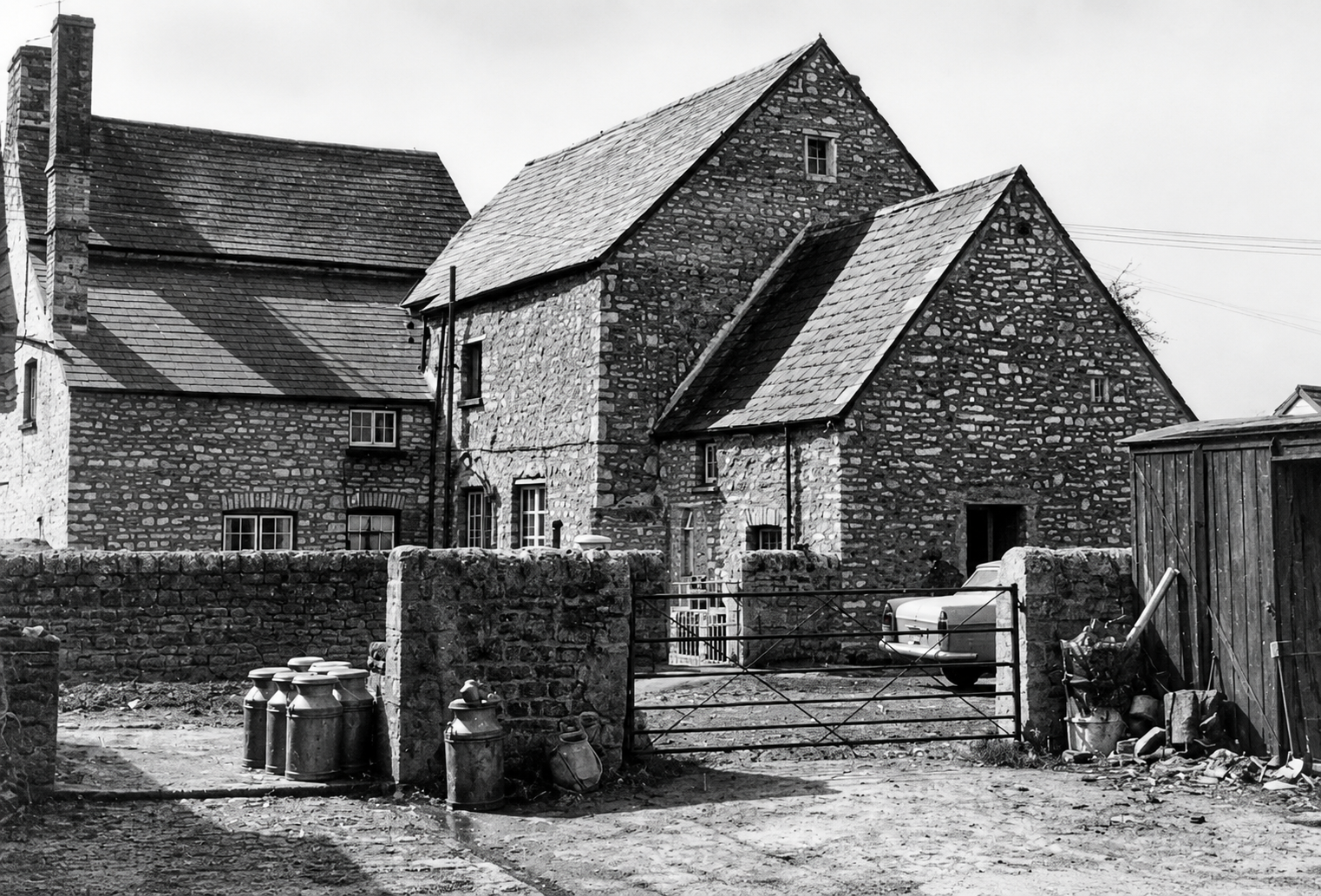
Garn-lwyd, lying just north of Llancarfan village, is one of the parish's most important historic farmsteads. Its origins are medieval, and the settlement is first recorded in 1441, when the property was associated with Lewis Mathew.
Through marriage, the estate subsequently passed to the Raglan family, who became closely associated with Garn-lwyd and remained there until about 1600. The surviving farmhouse is an exceptionally important late-medieval building, originally constructed as a tower-like first-floor hall. Its fine timber roof and surviving architectural features reflect the status of the medieval household, and the house is now Grade II* listed. The associated barn is also thought to have medieval origins, although it was substantially rebuilt in the nineteenth century.
The Raglans of Garn-lwyd were an influential local family and were closely connected with other properties in the Llancarfan area. Jenet Raglan of Garnllwyd married Thomas Bawdrip of Penmark in the late fifteenth century, and the family also became involved with the nearby Llanvithyn estate. After the Raglan ownership ended, Garn-lwyd eventually passed through the hands of Sir John Wildgose and then Sir Edward Lewis of the Van, before coming to the Aubrey family of Llantrithyd Place. The surrounding landscape retains evidence of the medieval agricultural system, including ancient field boundaries and woodland. Garn-lwyd therefore represents much more than an old farmhouse: it is a surviving centre of the medieval landed landscape that helped shape the character of Llancarfan for centuries.