

Please note, the majority of properties on the trail are now private residences,
please respect their privacy.
St Cadocs Church
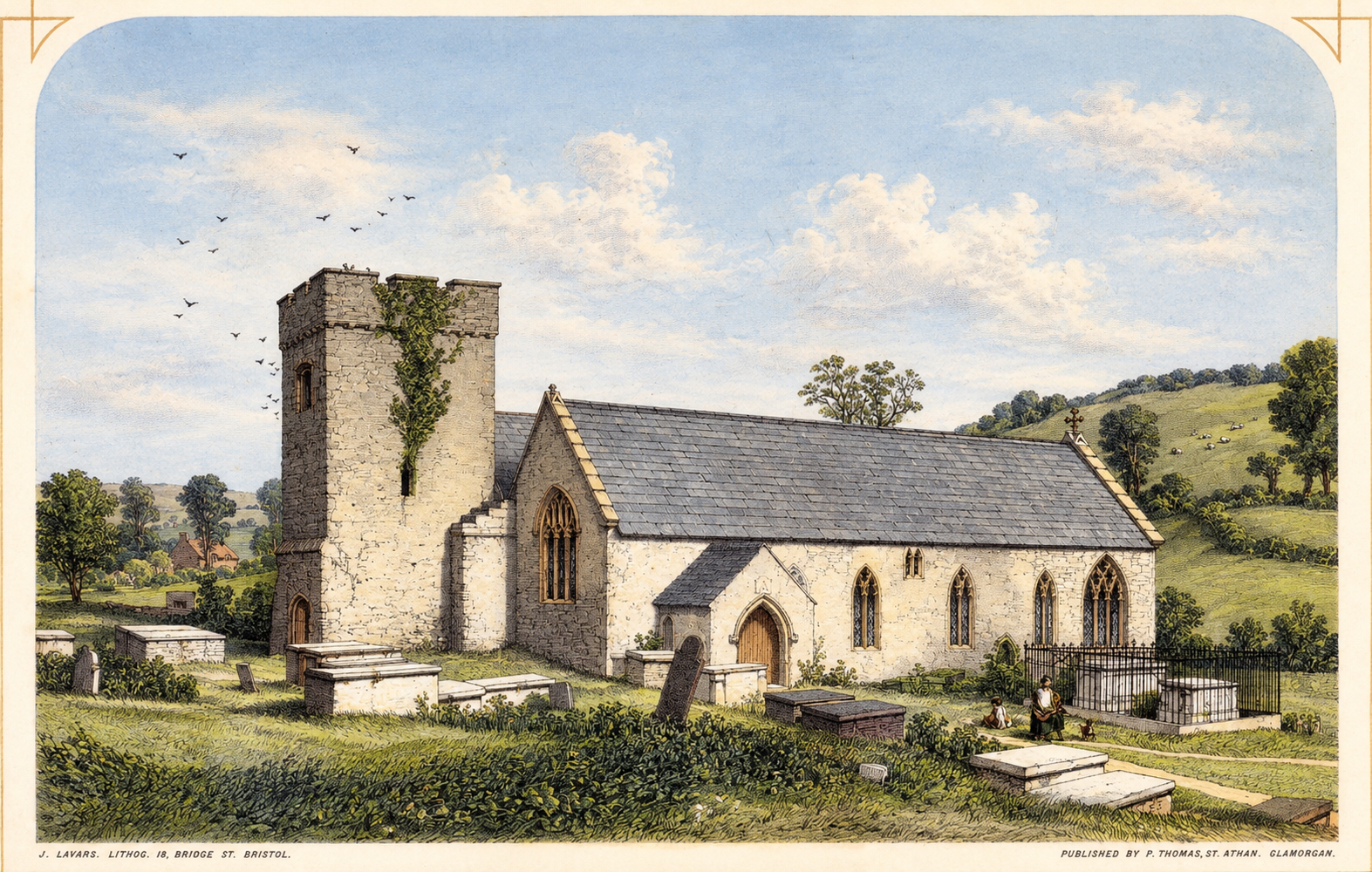
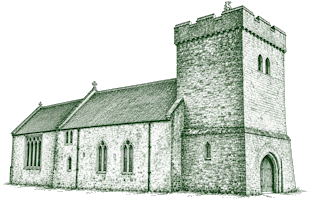
St Cadoc’s Church stands at the heart of Llancarfan and has its origins in the remarkable early Christian history of the valley. A monastery is believed to have been established here by St Cadoc, or Cadog, in the 6th or 7th century, making Llancarfan one of the important centres of early Christianity in South Wales. By the 9th century the monastery had become a flourishing centre of learning, with its principal buildings thought to have stood in the fields immediately south of the present church. Although the monastery eventually declined following the Norman conquest, the Christian tradition at Llancarfan continued, and the earliest surviving parts of the present church are believed to date from around 1200. The church subsequently came under the authority of St Peter’s Abbey in Gloucester and, over the centuries, has been altered and restored while continuing to serve the local community.
One of St Cadoc’s greatest treasures remained hidden for centuries. During restoration work in 2005–06, a small area of paint was noticed beneath the layers of limewash covering the walls. Further investigation revealed an extraordinary series of late-medieval wall paintings, concealed beneath more than twenty layers of limewash. Conservation work began in 2008 and uncovered scenes including St George and the Dragon, the Seven Deadly Sins and the striking image known as Death and the Gallant. The paintings, dating from the 15th century, are among the finest surviving medieval wall paintings in Britain. Today, St Cadoc’s is not only a place of continuing worship but also an exceptional surviving link with the religious, artistic and social history of Llancarfan, preserving evidence of more than 1,500 years of Christian heritage in the valley.